

Tattoo Ideas for Forearm: How to Find the Right Design for You
Searching for tattoo ideas for your forearm is often the starting point, but choosing the right tattoo involves more than finding one image you like online. The strongest forearm tattoos begin with a direction, then develop through conversation, placement and design choices that suit your arm.
At Lighthouse Tattoo Studio in Sydney, you bring the starting point, whether that’s a style you like, a subject you’ve been thinking about, a few reference images or simply an idea of how you want the tattoo to feel. If you’re looking for forearm tattoo ideas in Sydney but aren’t sure how to turn those ideas into a tattoo that works on your body, our artists can help shape the direction. We specialise in large-scale custom tattooing, with a strong focus on Japanese tattooing, developing each piece to work with your anatomy, your existing tattoos and the way you want your collection to come together over time.
You do not need to arrive with a finished drawing. You might be drawn to clean linework, bold contrast, Japanese-inspired movement, florals, a favourite object or a design that is purely visual. Personal meaning, cultural connection, art appreciation and simply liking how something looks are all valid reasons to get tattooed. The consultation is where those ideas become clearer and more personal to you.
How to Start Exploring Tattoo Ideas for Your Forearm
Start by noticing the tattoo styles and visual details that repeatedly catch your eye. Instead of trying to choose one finished design immediately, look for patterns in the references you save. You may keep returning to strong black outlines, soft botanical shapes, expressive faces, flowing backgrounds, symmetry or a particular colour palette.
A useful reference folder can include tattoos, artwork, photographs, objects, fabrics or illustrations. The aim is not to copy one image exactly. It is to give your artist a clear sense of the atmosphere, subject matter and visual language you respond to. From there, they can create something that is designed for your forearm rather than lifted from someone else’s tattoo.
When you are collecting references, consider:
- The styles you are naturally drawn to, such as fine line, traditional, blackwork, Japanese or illustrative work
- The visual elements you enjoy, including movement, contrast, texture, colour or negative space
- Interests, memories, culture or symbols that could inform the concept, if they matter to you
- Whether you prefer a quiet, minimal piece or a more prominent composition
- Which references share a similar feeling, even when the subject matter is different
Bringing a mix of references to your consultation gives the artist more useful information than arriving with one image and expecting a replica. It opens the door to a design that is original, readable and built for the placement.
How to Choose a Forearm Tattoo That Feels Right for You
A forearm tattoo can be meaningful, purely aesthetic or a mix of both. The important part is choosing a direction you genuinely enjoy and giving it enough space to look intentional on the body. A skilled artist can help you refine the idea without forcing it into a category that does not suit you.
Think about the tattoo in the context of your own preferences and existing work. If you already have tattoos nearby, the new piece may need to connect visually through scale, line weight, colour or background. If your forearm is clear, you have more freedom to decide whether the tattoo should stand alone or form the beginning of a larger composition.
It is also worth considering how visible you want the tattoo to be in everyday life. The outer forearm reads more openly when your arms are relaxed, while the inner forearm can feel more personal and is easier for you to see yourself. Neither is automatically better. The right choice depends on the design, the way you want it to sit and how it fits into your wider plans.
If you can imagine wanting a sleeve later, say so early. Beginning with the larger composition in mind helps the artist place the first piece with enough room for natural transitions, background and visual balance. Starting with a large-scale custom project is also a completely valid choice when you already know you want a more connected result.
Large-scale tattoos are completed over multiple sessions, with exact timing varying by detail, placement, skin and composition. As a general guide, a half sleeve usually takes around 12 to 18 hours, while a full arm sleeve commonly takes around 25 to 35 hours. A full leg sleeve may take around 35 to 50 hours, and a back piece can take around 55 to 80 hours. A full back with background often sits closer to 60 to 80 hours, while a composition without full background may take around 40 to 50 hours, with outlining often taking about two full-day sessions. Full-day appointments are typically capped at roughly 6 to 7 hours of actual tattooing and paced around your comfort and wellbeing.
What to Consider Before Getting a Forearm Tattoo
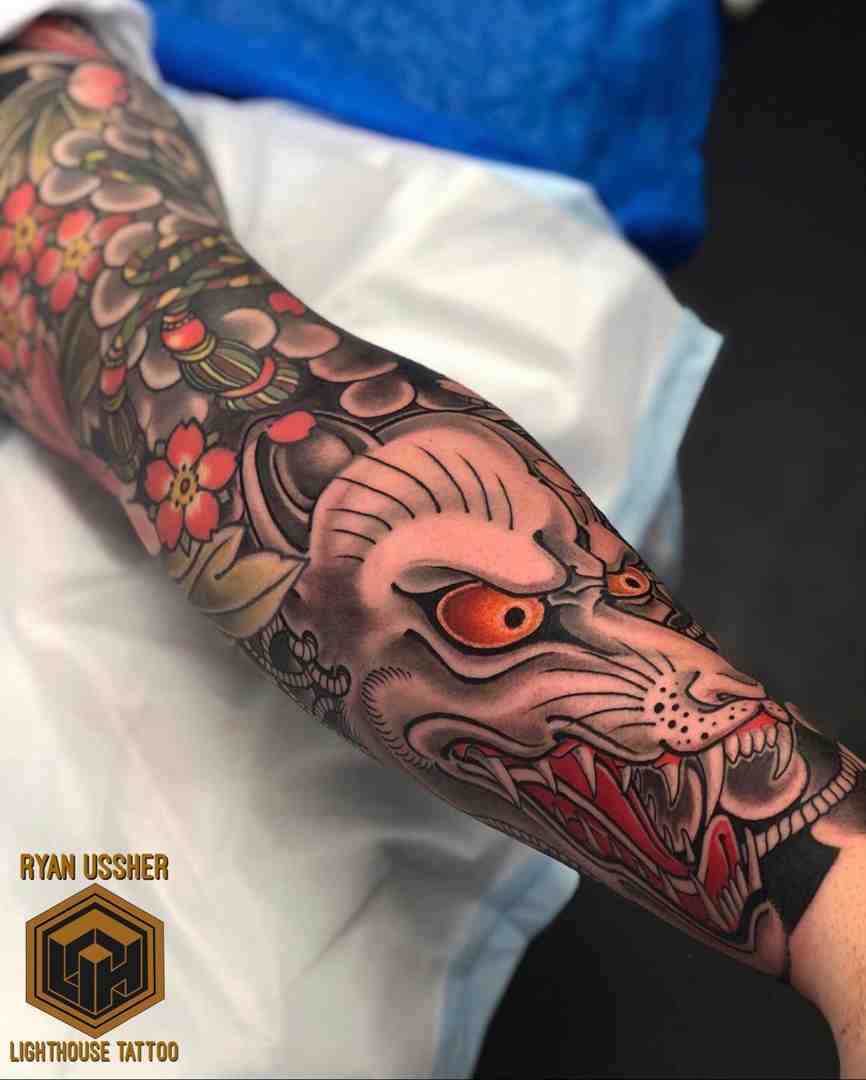
The forearm offers a versatile canvas, but placement decisions still matter. A design that looks strong as a flat reference can need adjustment once it follows the taper, rotation and movement of the arm. During consultation and stencil placement, Lighthouse Tattoo Studio considers the full picture rather than treating the forearm as a blank rectangle.
Key decisions include:
- Inner or outer forearm: Outer placement suits designs intended to read outwardly, while the inner forearm can suit pieces you want to see more often. The design should follow the placement, not the other way around.
- Size and scale: Fine details need enough room and breathing space to remain clear as the tattoo settles and ages. If a concept is too detailed for the available area, increasing the canvas usually produces a stronger result than shrinking every element.
- Orientation: Faces, figures, lettering and directional motifs need to sit correctly when your arms are in a natural resting position. Your artist will guide the orientation during stencil fitting.
- Visibility and daily life: Consider how often you want to see the tattoo, how easily it will be covered when needed and whether that visibility suits you.
- Existing tattoos and future plans: Nearby tattoos, open space and possible sleeve plans all affect where the design should begin and end.
- Body flow: The most successful forearm tattoos use the arm’s length and gentle taper to create movement rather than fighting against it.
The stencil stage is where these decisions become practical. Lighthouse Tattoo Studio’s client journey moves from enquiry to consultation, design collaboration, stencil or tracing, tattoo session and aftercare support. Seeing the design at full scale on your skin gives you and the artist the chance to refine the fit before tattooing begins. For cover-up projects, an in-person consultation and direct tracing are essential so the artist can assess the existing pigment and plan an effective new composition.
If you are considering numbing cream, speak with your artist first. Most options are lidocaine-based and may temporarily reduce surface sensation, but they do not remove vibration or pressure and can affect skin texture or ink uptake. Numbing cream should never be applied across a large area such as the entire back because systemic absorption can create serious safety risks.
Exploring Styles for Your Forearm Tattoo
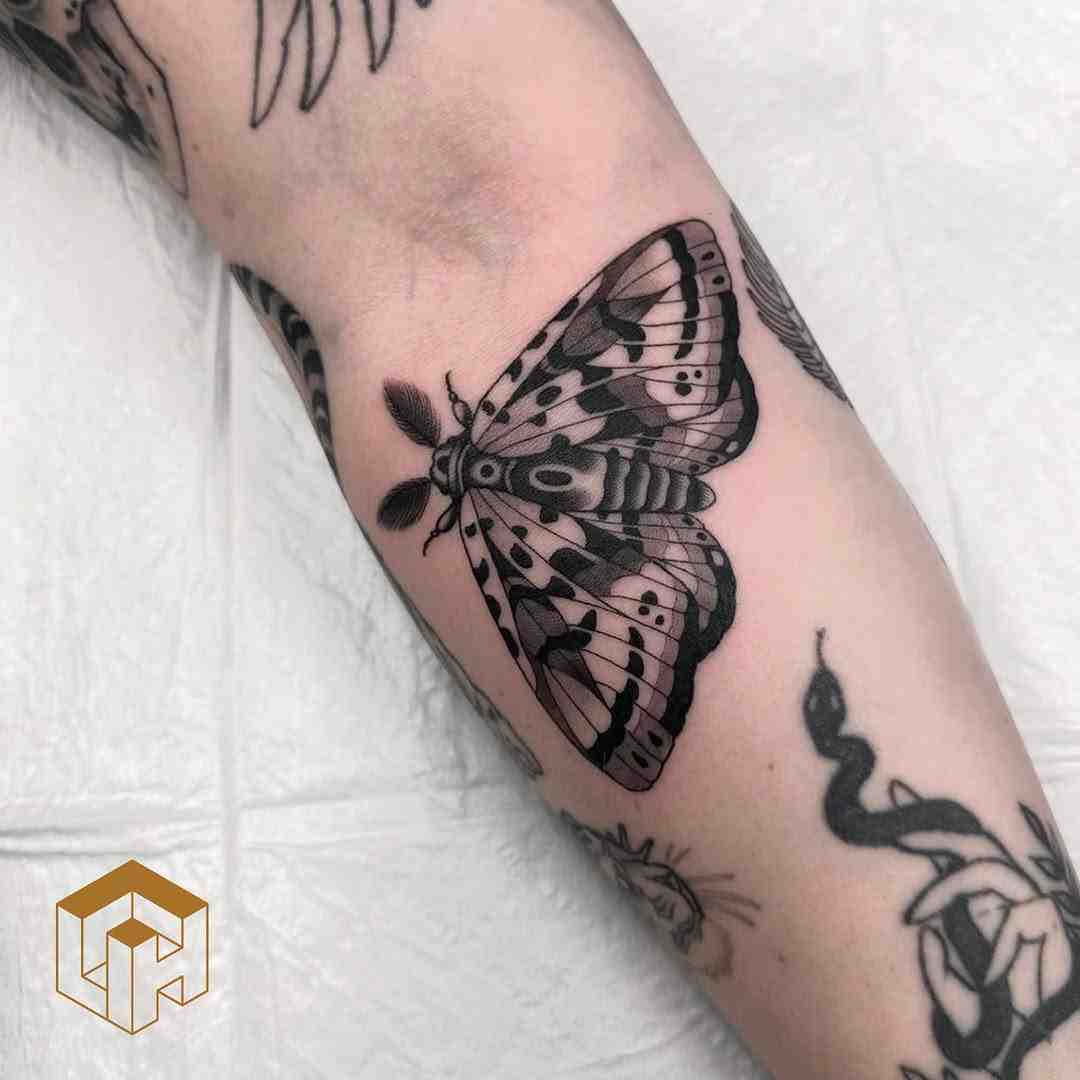
Different tattoo styles can work beautifully on the forearm when they are adapted to the available canvas and your overall direction. Rather than choosing from a fixed list of designs, use style as a way to identify the qualities you want the finished tattoo to have.
Fine-line and minimalist work can suit people who prefer restraint, detail and open skin around the design. These pieces need considered spacing so the artwork stays legible over time. Traditional tattooing uses bold outlines, strong contrast and clear shapes, making it a good match for forearm designs that need to read from a distance.
Japanese tattooing, often called Irezumi, places particular emphasis on body flow, movement and connected composition. A self-contained motif can work well as a forearm tattoo, while larger subjects such as dragons are better developed as custom projects that move around the limb. Background elements and negative space are planned around the central subject so the piece feels balanced rather than crowded.
Blackwork, illustrative work, botanical designs and geometric approaches can also be developed around the forearm’s shape. The best style is not the one that is currently most visible online. It is the one that gives the artist a clear foundation for a tattoo you want to wear and that has the scale to work well on your body.
Forearm Tattoo Questions: What to Know Before Booking
Do I need a finished design before booking a forearm tattoo?
No. Bringing a few references, a style direction or a loose concept is enough to begin. Your artist can ask the right questions, identify the common elements in your references and develop a custom design that suits your forearm.
Should a forearm tattoo have personal meaning?
It can, but it does not have to. Some clients choose tattoos connected to memories, culture or important interests, while others choose a design because they love the style, subject or visual impact. Both approaches are valid.
Is the inner or outer forearm better for a tattoo?
It depends on the design and how you want the tattoo to be seen. The outer forearm is more outward-facing, while the inner forearm can feel more personal. During consultation, your artist can assess which placement gives the artwork the best flow and readability.
Can one forearm tattoo become part of a sleeve later?
Yes. Let your artist know if a future sleeve is possible. They can plan the first piece with suitable scale, placement and transition space so a larger composition can develop naturally over time.
How large should a forearm tattoo be?
The design should be large enough for its lines, shading and details to remain readable. If the concept has many elements, a larger canvas usually produces a cleaner long-term result than compressing everything into a small space.
What happens during forearm tattoo stencil placement?
Your artist places the stencil on your arm, checks the orientation from different angles and makes sure the design follows your anatomy. This is the time to confirm the height, direction and overall fit before the tattoo session begins.
Turning Your Forearm Tattoo Idea Into a Custom Design
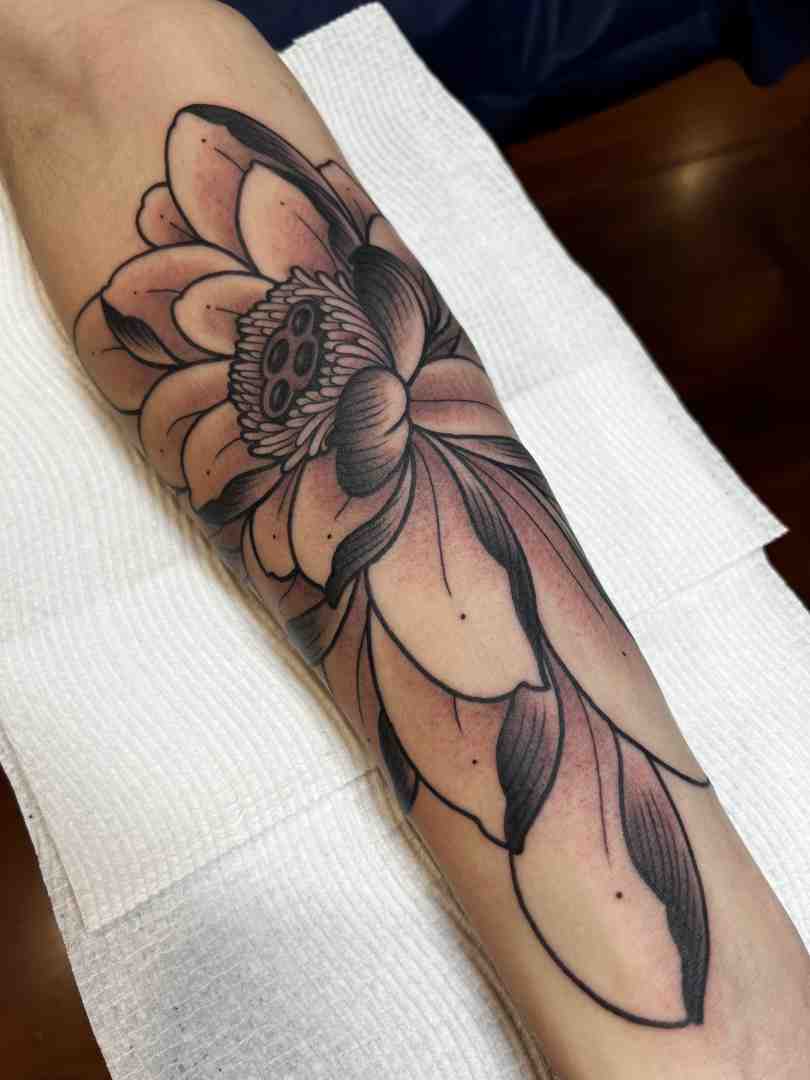
Your tattoo idea for your forearm does not have to arrive as a finished image. A reference folder, an interest, a style you keep returning to or a rough concept can be enough to start the conversation. The artist’s role is to help develop that idea into a design with the right placement, scale, readability and body flow.
At Lighthouse Tattoo Studio, the process begins with your enquiry and continues through consultation, design collaboration, stencil fitting, tattoo session and aftercare support. If you are looking for a tattoo artist in Sydney to help develop a forearm idea, your artist considers the arm’s shape, the visibility of the placement, the amount of detail the design needs and whether the piece may connect to future work. That collaborative process turns an initial idea into a tattoo that feels considered on your forearm and genuinely yours.
Lighthouse Tattoo Studio is an artist-led, consultation-driven studio in Sydney, with locations in Surry Hills and St Peters. Whether you are planning one standalone piece or beginning a larger project, our focus is craftsmanship, design integrity and long-term body flow.
- Book a consultation to discuss your forearm tattoo idea with the studio.
- Meet the Lighthouse Tattoo artists and explore the styles they work in.
- Browse the Lighthouse Tattoo styles gallery before bringing your references and future plans to the consultation.

