

What Can You Expect at a Lighthouse Tattoo Studio Japanese Tattoo Consultation in Sydney?
At a Lighthouse Tattoo Studio Japanese tattoo consultation in Sydney, you can expect a focused conversation about your design ideas, a placement and body-flow assessment, physical tracing or measurements, and practical guidance on booking future tattoo sessions. Your artist will discuss motifs, background elements, scale, budget expectations, timeline, and deposit requirements so your tattoo can be custom-drawn to fit your body before tattooing begins.
Quick summary: what happens during the consultation
- You discuss the subject matter, style, placement, scale, colour direction, and long-term goals for the tattoo.
- Your Lighthouse Tattoo Studio artist assesses how the design should flow across your body, including sleeves, back pieces, cover-ups, extensions, and bodysuits.
- The artist may take measurements or tracing references so the final design can be drawn around your actual body shape.
- If the project feels like the right fit, the studio will explain session planning, deposit requirements, and how to book your tattoo dates.
Who Is This Guide For?
This guide is for anyone in Sydney who is ready to book a Japanese tattoo consultation and wants to understand what happens before the first tattooing session. It is especially useful if you are planning a sleeve, leg sleeve, back piece, cover-up, extension of an existing tattoo, or a larger bodysuit project that needs careful long-term planning.
It is also for clients who know they like Japanese tattooing but are still refining the exact subject matter. You do not need to arrive with every detail finalised. At Lighthouse Tattoo Studio, the consultation is designed to help turn your references, placement ideas, and personal preferences into a clear custom direction.
How Do You Choose the Right Japanese Tattoo Artist in Sydney?
Choosing the right artist is the most important decision you will make for your Japanese tattoo. When researching Sydney studios, look closely at the core elements of the craft: composition, line weight, healed results, and how well the artwork follows the body. A strong Japanese tattoo should remain readable from a distance and still feel balanced as it wraps around the arm, leg, back, ribs, or torso.
It is highly beneficial to seek out an artist-led, consultation-driven studio. At Lighthouse Tattoo Studio, the consultation process focuses on craftsmanship, body flow, longevity, and design integrity rather than rushing straight into a drawing. Our team works across custom Japanese tattoos, realism, traditional, and other styles, which helps clients find an artist whose portfolio genuinely matches the project.
If you are new to the style and want to know how to navigate your options, check out our guide on Japanese Tattooing in Sydney: Where to Start If You’re New.
What Makes Lighthouse Tattoo Studio’s Consultation Process Different?
A Lighthouse Tattoo Studio consultation is not just a quick quote or a same-day sketch. It is a structured planning session where the artist considers the design, the body area, the existing tattoos around it, the long-term direction of the project, and the practical session plan.
For larger Japanese work, this matters because one tattoo often affects the next. A half-sleeve may later become a full sleeve. A back piece may eventually connect into the ribs, thighs, or bodysuit planning. A cover-up may need extra space, darker background elements, or a different composition to work properly. By discussing these possibilities early, your artist can help you avoid short-term choices that limit future options.
You can book a time to speak with our specialists at either our Surry Hills Studio or our St Peters Studio. Visiting the studio allows you to meet the team, see the space, and feel confident before your sessions begin.
What Should You Bring to a Japanese Tattoo Consultation?
A little preparation helps your artist understand your vision quickly. Before you arrive at Lighthouse Tattoo Studio, think about the core elements of your tattoo: the main subject, background style, colour direction, placement, scale, and how this piece may connect with future work.
What to bring checklist
- Reference images showing motifs, background styles, colour palettes, or compositions you like
- Photos of your own body area where the tattoo will go, especially if you are discussing by email first
- Clear photos of any existing tattoos that may need to be worked around, extended, rebalanced, or covered
- A rough idea of placement, such as arm sleeve, leg sleeve, back piece, chest panel, ribs, or bodysuit planning
- Notes on what you do not want, including colours, motifs, or styles to avoid
- A realistic budget range and availability for multi-session work
- Any timing considerations, such as travel, work commitments, healing windows, or major events
You do not need to bring a finished design. In fact, custom Japanese tattooing works best when your references are treated as inspiration rather than a template to copy. Your artist will use them to understand the direction, mood, and visual language you are drawn to, then create a design that fits your body.
How Should You Prepare Your Skin and Body?
The condition of your skin can affect both planning and tattooing. In the lead-up to your consultation and future appointments, keep your skin hydrated, avoid heavy sunburn, and moisturise the area with a gentle product if your skin tolerates it well.
Avoid clean shaving the area with a standard razor the day before a tattoo appointment, as razor burn or irritation can make the skin harder to work with. If needed, use an electric trimmer to shorten hair, or leave the area alone and let your artist prepare it safely on the day. For more tips on skin health, read our article on Preparing Your Skin for a Tattoo.
What Actually Happens During a Lighthouse Tattoo Studio Consultation?
When you arrive for your consultation, you will sit down with your Lighthouse Tattoo Studio artist in a relaxed, professional Sydney studio setting. The conversation will focus on what you want the tattoo to achieve, where it will sit, how large it needs to be, and whether the design should stand alone or connect to future Japanese tattoo work.
Your artist will ask about the main motifs you are interested in, such as dragons, koi, Hannya masks, kitsune, flowers, waves, wind, clouds, or other Japanese-inspired elements. The goal is not to overload the design with symbolism, but to choose imagery that works visually, suits the placement, and feels right for you.
To get a broader sense of what to expect during this initial meeting, you can also read our walkthrough on What to Expect at Your Tattoo Consultation.
Will the Artist Trace or Measure the Area?
For many custom Japanese tattoos, yes. Your artist may use tracing paper, photos, or body measurements to map the area and understand how the design should wrap, stretch, and connect across the body.
This is especially important for sleeves, leg sleeves, back pieces, cover-ups, and bodysuit planning. The tracing gives the artist a practical reference for drawing the custom composition later, so the tattoo does not feel like a flat image placed on the skin. If the idea contains too much detail for the available area, your artist may recommend increasing the canvas or simplifying the concept so the tattoo remains readable as it ages.
What If You Already Have Tattoos or Need a Cover-Up?
Existing tattoos should always be discussed during the consultation. Your artist will look at the size, darkness, placement, and style of the existing work before advising whether the new Japanese design can work around it, extend from it, or cover it.
Cover-ups often require more flexibility than new tattoos on clear skin. Darker backgrounds, larger compositions, or adjusted placement may be needed to achieve a strong final result. At Lighthouse Tattoo Studio, this is part of the planning conversation, especially if your long-term goal is a sleeve, back piece, or bodysuit that needs to feel cohesive rather than patched together.
How Do Budget, Deposits, and Multi-Session Timelines Work?
Once you and your artist have agreed on the design direction, scale, and placement, the consultation usually moves into practical planning. Large-scale Japanese tattoos are major commitments that are completed over multiple sessions, so our team will talk through the likely time involved, how sessions may be spaced, and what deposit is required to secure tattooing dates.
Budget expectations are discussed without reducing the project to a fixed one-size-fits-all price. The final cost depends on the artist, size, placement, detail level, colour approach, cover-up complexity, and how your skin responds during the sessions. A small standalone piece, a sleeve, a full back piece, and a bodysuit are very different commitments, so the consultation is the right place to align your preferred scope with a realistic budget.
General planning ranges can help you understand the scale of larger work:
- Arm sleeve: Often planned over multiple sessions, with enough time to create a continuous flow from shoulder to wrist.
- Leg sleeve: Usually requires more planning around the knee, calf, shin, and thigh so the design moves naturally.
- Full back piece: A long-term project that may extend below the waistline for a more traditional, cohesive finish.
- Bodysuit or connected work: Planned in stages so sleeves, back, ribs, chest, thighs, and background elements can eventually work together.
How Should You Plan for Longer Japanese Tattoo Projects?
Longer Japanese tattoo projects require patience. Rather than trying to complete everything at once, your artist will usually recommend manageable sessions that suit the design, your endurance, and the artist’s ability to maintain focus.
To prepare, eat well before each appointment, stay hydrated, sleep properly, and bring snacks or drinks to keep your energy stable. If you are considering numbing creams, discuss this with your artist before the appointment so they can advise whether it is suitable for your skin and the type of work being done.
Can You Walk In and Get a Custom Japanese Tattoo on the Spot?
For large-scale custom Japanese tattoos, same-day tattooing is usually not available. These designs need to be planned around your body, existing tattoos, placement, and long-term goals, which means your artist needs time after the consultation to draw the composition properly.
Walk-ins may be suitable for smaller flash tattoos or simple ready-to-go designs, but a custom Japanese sleeve, back piece, cover-up, or bodysuit plan requires a different process. Taking the time to consult, measure, and draft the artwork gives you a stronger final tattoo and a clearer path for future sessions.
Will the Artist Draw the Final Design During the Consultation?
Your artist will not usually draw the final design during your consultation. The consultation is for gathering information, assessing placement, taking measurements where needed, reviewing references, and agreeing on the creative direction.
After you leave, the artist uses the consultation notes and body references to sketch the custom composition. Before your first tattooing session, you will have the opportunity to review the design, discuss minor adjustments, and make sure you are comfortable before the stencil is applied.
How Long Does a Japanese Tattoo Session Usually Take?
A typical session for a large-scale Japanese tattoo often runs for several hours, though the exact length depends on the artist, placement, detail level, and your endurance. Some clients prefer shorter sessions, while others are comfortable with longer sitting times.
The overall duration of your project is influenced by several factors:
- Detail: Intricate scales, flowers, armour, background patterns, and texture take longer to execute.
- Placement: Ribs, knees, elbows, stomachs, and softer skin can require slower, more careful work.
- Existing tattoos: Cover-ups or extensions may take extra planning and additional passes.
- Composition: Large black backgrounds, connected sleeves, back pieces, and bodysuit sections require steady long-term scheduling.
- Healing: Sessions need to be spaced so each area can heal properly before the next stage.
Do Japanese Tattoo Motifs Need Deep Symbolic Meaning?
Japanese tattoo motifs can carry rich traditional associations, but you do not need a complex personal story behind every element. Many clients choose dragons, koi, Hannya masks, kitsune, samurai, chrysanthemums, peonies, waves, or clouds because they love the visual strength and flow of the style.
During your Lighthouse Tattoo Studio consultation, your artist can explain which motifs and background elements work well together and which combinations may feel visually inconsistent. The main priority is building a tattoo that looks cohesive, suits your body, and can age well over time.
If you want a deeper explanation of symbolism, that topic is better suited to a dedicated motif guide. For a consultation-focused appointment, the most important questions are what you like visually, where the tattoo will sit, how large it should be, and how it may connect to future work.
What Aftercare Instructions Should You Expect After Your Session?
Proper aftercare is essential for preserving the bold lines and vibrant colours of your Japanese tattoo. While we are not medical professionals, our advice is based on years of professional studio experience. To ensure your tattoo heals beautifully, we recommend following this structured timeline:
- First 3-4 Hours: Keep the initial wrap applied by your artist on the tattoo to protect the fresh area. Once you remove the wrap, gently clean the tattoo using lukewarm water and a mild, fragrance-free cleanser like QV Gentle Wash. Avoid using bar soaps, as they can harbour bacteria.
- Week 1: Apply approved aftercare products (such as Palmer’s Cocoa Butter, Dr Pickles Tattoo Balm, or Bamboo Goo) in a very thin layer. Applying too much cream can suffocate the skin. Avoid swimming, soaking in baths, and direct sun exposure during this initial phase.
- Days 10-14: The tattoo will typically begin to peel or flake, similar to mild sunburn. Avoid picking or scratching at any loose skin, as this can pull the ink out. Continue to moisturise lightly to keep the skin hydrated.
- After 2-4 Weeks: The skin surface is generally healed, though deeper layers continue to settle. You can return to normal activities like swimming, but always apply a high-quality sunscreen to protect the longevity and clarity of the ink.
- Touch-ups: Once the healing process is fully complete, your artist can assess the settled ink and perform any minor touch-ups if necessary to ensure the design looks perfect.
Ready to Book a Japanese Tattoo Consultation in Sydney?
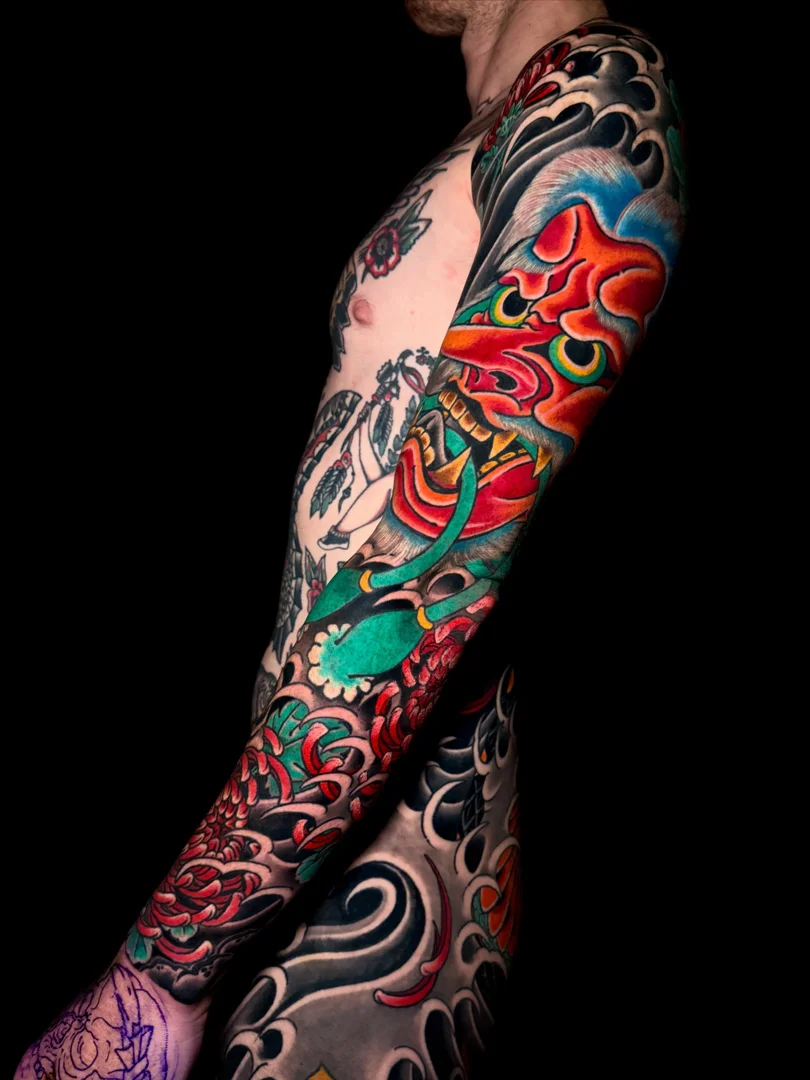
Booking a Japanese tattoo consultation is the first step in a highly rewarding, collaborative creative process. From your initial chat to the final aftercare steps, Lighthouse Tattoo Studio’s priority is ensuring you feel comfortable, informed, and excited about your custom artwork. Whether you are starting your first sleeve, planning a full back piece, working around existing tattoos, or thinking long-term about a bodysuit, our Sydney team can help you plan the project properly from the beginning.
If you are ready to bring your vision to life, we invite you to take the next step:
- Book a custom consultation via our Contact Page
- Explore our resident and guest Artists
- Learn more about our dedicated Japanese Tattooing services
- Browse our Styles Gallery for inspiration
A few practical details are worth knowing before you book. Consultation appointments are free, but a deposit is required if you decide to secure tattooing dates afterward. Bring reference images, placement ideas, existing tattoo photos, and a sense of your preferred scale so your artist can give clear guidance. For custom Japanese tattoos, same-day tattooing is not usually available because the design needs to be drawn around your body measurements after the consultation. If you need to reschedule booked tattoo sessions, give the studio sufficient notice according to the booking policy so your deposit can be transferred to your new dates.
Common Questions About Booking a Japanese Tattoo Consultation
Is a consultation necessary before booking my tattoo sessions?
Yes. For custom Japanese work, a consultation is essential. It allows your artist to take physical measurements of your body, discuss your ideas, and plan a cohesive composition that flows naturally with your muscles.
Do I have to pay for a tattoo consultation?
No, our consultation appointments are completely free. However, if you decide to move forward and book your actual tattooing sessions, we will require a deposit to secure your dates in the calendar.
What should I bring to my Japanese tattoo consultation?
Bring a collection of reference images that show the motifs, background styles, and colour palettes you like. You should also have a clear idea of where you want the tattoo placed and the overall scale of the project.
Can I get tattooed on the same day as my consultation?
For custom Japanese tattoos, we do not offer same-day tattooing. Because the artwork is custom-drawn to fit your body’s specific measurements, the artist needs time to draft the design after your consultation.
What happens to my deposit if I need to reschedule?
Your deposit secures your calendar slots and counts toward your final session. If you need to reschedule, simply give our studio sufficient notice (as outlined in our booking policy), and we will transfer your deposit to your new dates.

