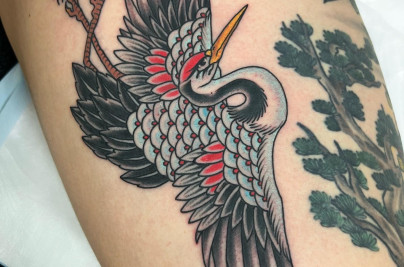
What You Need to Know About Japanese Dragon Tattoos
Japanese dragon tattoos are among the most iconic and enduring designs in tattoo culture, and for good reason. They combine striking visual power with centuries of mythological depth, making them a compelling choice whether you are drawn to the symbolism, the aesthetic, or both.
Here is a quick overview before we go deeper:
- What they represent: Wisdom, strength, protection, good fortune, and balance between opposing forces.
- How they look: Typically depicted as long, serpentine creatures with carp-like scales, stag horns, a camel-shaped head, and usually three claws.
- Where they come from: Dragon mythology originated in China and spread through Korea to Japan, where it evolved into its own distinct tradition.
- Popular placements: Full sleeves, back pieces, chest panels, forearms, and leg sleeves.
- Common colour meanings: Black (wisdom), red (power), gold (wealth), green (nature), blue (benevolence).
- Style options: Traditional Irezumi, black and grey, neo-Japanese, and fineline interpretations.
- Key design elements: Often paired with waves, clouds, koi fish, cherry blossoms, Hannya masks, and phoenixes.
If you are seriously considering getting one, the short answer is: a Japanese dragon tattoo is a significant piece of work that rewards proper planning. The designs are bold, the compositions are complex, and the results, when done well, are genuinely extraordinary.
At Lighthouse Tattoo, we work with clients across Sydney to build these pieces from the ground up, with a focus on design integrity, body flow, and long-term quality. Whether you are in Surry Hills or St Peters, the process starts the same way: a proper conversation about what you actually want.
This guide covers everything, including meaning, colour, placement, complementary motifs, timelines, pain, and aftercare, so you can walk into that consultation with confidence.
The Cultural and Spiritual Meaning of Japanese Dragon Tattoos
In traditional Japanese tattooing, known broadly as Irezumi, the dragon (or Ryu) is far more than a decorative monster. It is revered as a benevolent force, a protector of mankind, and a controller of the natural elements.
While Western folklore often casts dragons as fire-breathing, cave-dwelling beasts that must be slain by heroes, the Japanese dragon is historically celebrated as a water deity. They are associated with the rain, the oceans, the clouds, and the flow of rivers. Because water is essential for agriculture and survival, the Ryu is naturally viewed as a symbol of life, blessing, and prosperity.
When you wear a dragon, you are carrying a symbol of deep wisdom, strength, and protection from misfortune. It is a guardian motif designed to help you navigate the turbulent waters of life. If you are exploring a broader Japanese tattoo design, understanding this foundational relationship with water and nature is key to shaping your project.
The Mythological Origins and Regional Evolution
The mythology of the dragon is a fascinating journey of cultural exchange. The concept originally developed in China thousands of years ago, where the dragon was associated with imperial power, wealth, and control over the weather. Over the centuries, these legends spread through the Korean peninsula and eventually reached Japan, adapting and shifting within each culture.
A simple way to tell these traditions apart is the claw count: Chinese dragons are commonly shown with five claws, Korean dragons with four, and Japanese dragons with three.
Anatomy of a Legend: The Visual Features of Japanese Dragon Tattoos

A traditional Japanese dragon is an artistic hybrid, combining the physical attributes of several different creatures to represent a balance of natural powers. When planning your custom design, your artist will focus on these classic anatomical features:
- The Head: Shaped like a camel, giving it an elongated, majestic profile.
- The Horns: Branching out like those of a stag, representing nobility and connection to the forest.
- The Eyes: Fierce and expressive, often resembling those of a demon or a wild beast to convey intense power.
- The Body: A long, serpentine form covered in the scales of a koi carp, symbolising fluidity and resilience.
- The Claws: Commonly shown as three sharp claws on each foot.
Unlike European dragons, the Ryu is usually wingless, flying through the sky using spiritual energy rather than physical wings. Winged Japanese dragons do exist in some artwork, but the wingless, serpentine form is much more common in modern and traditional tattooing because it allows the design to wrap seamlessly around the limbs and torso, maximising how the design moves with the body.
Decoding the Colours of the Ryu
Colour is a powerful storytelling tool in Japanese tattooing. While black and grey designs offer timeless contrast and age beautifully, introducing colour can add layers of personal meaning to your piece. If you are browsing Japanese style tattoo ideas, here is what the traditional colours represent:
- Black Dragons: Represent deep experience, quiet strength, and profound wisdom. Black and grey work is incredibly popular because it highlights the intricate linework and shading of the scales.
- Red Dragons: Symbolise fierce power, passion, and vital energy. A red dragon stands out dramatically on the skin and is often associated with raw, protective force.
- Blue Dragons: Associated with benevolence, gentleness, and forgiveness. They reflect the calm, life-giving aspects of water.
- Green Dragons: Closely tied to nature, growth, and the natural cycles of life. A green dragon represents a fresh start or a deep connection to the earth.
- Gold and Yellow Dragons: Represent value, virtue, wealth, and leadership. Historically linked to nobility, gold dragons are often paired with bright background elements to emphasise their majestic status.
Popular Placements, Compositions, and Complementary Elements
In our Sydney studios, we always emphasise that a great tattoo is about how the design moves with the body. For large-scale Japanese work, the placement is just as important as the subject itself.
Because of their long, winding bodies, dragons require a canvas that allows them to stretch and curve. Compression is the enemy of detail. If you try to squeeze a highly complex dragon into a tiny space, the details will blur as the tattoo ages. Instead, we look to match the scale of the design to the natural canvas of your body.
Popular placements include:
- Full Back Pieces: The ultimate canvas, allowing the dragon to dominate the back with its head near the shoulders and its tail winding down the thighs.
- Sleeves (Arm or Leg): Perfect for wrapping the serpentine body around the limb, creating a sense of constant motion.
- Chest Panels: Often combined with a sleeve, where the dragon’s head rests on the chest and its body extends over the shoulder and down the arm.
To make the dragon stand out, traditional compositions use background elements (known as Gaku) to frame the central subject. Clouds (Kumo) suggest celestial ambition, while crashing waves keep the dragon grounded in the power of the deep ocean. These elements are not just decorative; they create contrast and ensure your Japanese dragon tattoo sleeve remains clear and readable from a distance for decades to come. How elements are arranged visually is key to the longevity of the piece.
Pairing the Dragon with Other Traditional Motifs
A dragon does not have to fly solo. In traditional Japanese compositions, pairing the dragon with another iconic motif creates a dynamic narrative of balance and tension:
- The Dragon and the Tiger: This is one of the most famous pairings in Eastern art. As explored in our guide on The dragon and the tiger, these two creatures represent equal but opposite elemental forces. The dragon represents the sky and water, while the tiger represents the earth and wind. Together, they symbolise a perfect balance of power, mind, and body.
- The Dragon and the Koi: According to legend, a humble koi fish that successfully swims up the yellow river and leaps over the Dragon Gate is transformed into a powerful dragon. Pairing them together represents personal growth, perseverance, and triumph over adversity.
- The Dragon and the Phoenix: Symbolises the ultimate harmony, often representing a successful marriage or the perfect union of active and receptive energies.
- The Dragon and the Hannya: Combining the wise protector with the jealous, transformed demon mask creates a striking visual contrast between protective wisdom and raw emotional power.
Planning Your Japanese Dragon Tattoos: Sleeves, Backs, and Timelines
Large-scale work is a journey, not a quick pitstop. Because of the incredible detail involved in the scales, background bars, and wind patterns, these tattoos are completed across multiple sessions.
The exact timeframe depends entirely on your skin, the complexity of the design, and how the composition wraps around your body. As a general guide, you can expect the following timelines:
- Arm Sleeve: Typically 25 to 35 hours.
- Leg Sleeve: Typically 35 to 50 hours.
- Back Piece: Typically 55 to 80 hours.
During your initial consultation, your artist will help structure your sessions, giving you a realistic roadmap of how the design will develop over time.
The Custom Tattoo Journey: From Consultation to Aftercare
At Lighthouse Tattoo, we believe that getting a major piece of Japanese tattoo body art should be an inspiring, collaborative experience. We offer flash tattoos as a quick, ready-to-go option for simple or immediate designs, but we deeply value collaborating on custom designs tailored to each individual. We break this down into a simple, 6-step journey:
- Enquiry: You reach out online or drop by one of our Sydney locations to share your initial ideas, preferred placement, and references.
- Consultation: A face-to-face chat with your artist. This is where we discuss the flow of the design, align on the budget and expectations, and map out the overall composition.
- Design Collaboration: Your artist customises the dragon to fit your specific body shape, ensuring the scales, head, and claws flow naturally with your muscles.
- Stencil and Tracing: We apply the stencil or draw directly onto your skin to ensure the background elements (like waves and clouds) wrap perfectly around your joints.
- Tattoo Sessions: The actual tattooing process, broken down into manageable sessions focusing first on linework, then shading, and finally colour.
- Aftercare and Support: We guide you through the healing process step-by-step to protect your investment.
This structured process is especially vital for cover-ups. If you have an old tattoo you want to hide, an in-person consultation is essential. We can trace the area and adapt a custom dragon design, using the dark swirling clouds or deep ocean waves of the background to seamlessly mask the old ink.
Understanding Tattoo Pain and Preparation
Tattooing involves controlled micro-trauma to the skin, where the needle deposits pigment into the dermis, roughly 1.5 to 2mm deep. While the sensation is intense at times, it is highly manageable because the process is expected and temporary.
The sensation changes depending on what stage of the tattoo you are in:
- Linework: Often feels sharp, hot, or like a fine burning cut.
- Shading: Usually feels like persistent scratching, heat, or abrasion.
- Over Bone: Can create strong vibration or pressure sensations.
- Long Sessions: Often shift into a heavy, fatigued dull ache as the body adapts.
To make your session as comfortable as possible, focus on your breathing. Slow, controlled breathing helps regulate your nervous system and reduces physical tension. Holding your breath or bracing actually increases your sensitivity and makes you tire faster.
For preparation, we recommend a simple checklist: eat a solid meal beforehand, stay hydrated, get a good night’s sleep, and wear comfortable clothing that gives easy access to the placement area. If you are considering numbing creams, keep in mind they are temporary, lidocaine-based solutions that can sometimes affect skin texture. Always discuss them with your artist before applying them.
Aftercare Timeline and Recommended Products
Once you leave the studio, the longevity of your tattoo is in your hands. Based on our extensive studio experience, here is the recommended aftercare timeline:
- First 3 to 4 Hours: Keep the protective wrap on. When you remove it, wash your hands first, then gently clean the tattoo with lukewarm water and a mild, fragrance-free wash using your hands only. Pat dry with a clean paper towel and let it breathe.
- Week 1 (Days 1 to 7): Clean the tattoo gently 2 to 3 times a day. Apply a very thin layer of aftercare balm. Wear loose clothing, and strictly avoid swimming, baths, direct sun, and picking at any scabs.
- Days 10 to 14 (Peeling Stage): The tattoo will begin to peel and flake like a sunburn. This is completely normal. Keep moisturising lightly 1 to 2 times a day, and do not pick or scratch.
- Touch-ups: If any areas of pigment require touch-ups after the initial healing phase, contact your artist to schedule a brief session once the skin has fully settled.
- After 2 to 4 Weeks: The skin should feel smooth and the peeling should be finished. Once fully healed, get into the habit of applying sunscreen to protect the colours from fading in the harsh Australian sun.
For products, we highly recommend gentle options like QV Gentle Wash for cleaning, and Dr Pickles Tattoo Balm, Palmer’s Cocoa Butter, Bamboo Goo, After Inked Tattoo Lotion, or Vaseline Deep Restore for keeping the skin hydrated.
Disclaimer: We are not medical professionals, but these recommendations are based on years of successful healing within our studios.
Frequently Asked Questions about Japanese Dragon Tattoos
Why do Japanese dragons typically have three claws?
The three-claw feature is a traditional cultural distinction. While Chinese dragons are depicted with five claws to represent imperial power, the mythology evolved as it travelled through Korea (four claws) to Japan (three claws). Maintaining three claws in your design respects the historical roots of the Japanese Ryu.
How painful is a large-scale Japanese dragon tattoo?
Pain is highly individual, but large-scale pieces are completely manageable when broken down into multiple sessions. Fleshy areas like the outer arm or thigh are generally easier, while areas over bone (like the ribs, collarbone, or elbow) will feel more intense. Staying hydrated, breathing steadily, and taking regular breaks will help your body adapt.
How long does a full Japanese dragon sleeve take to complete?
A full arm sleeve typically takes between 25 and 35 hours of active tattooing. This is split across several sessions, usually spaced a few weeks apart, to allow the skin to heal properly between sittings.
Can a Japanese dragon tattoo be used as a cover-up?
Yes, absolutely. Because traditional Japanese compositions rely heavily on dark, flowing background elements like storm clouds, wind bars, and waves, they are perfect for cover-ups. Your artist will use these darker elements to mask the old tattoo while placing the highly detailed head of the dragon on clean skin.
What is the correct aftercare routine for a new dragon tattoo?
Keep the wrap on for the first 3 to 4 hours, wash gently with a fragrance-free soap, and pat dry. For the first week, wash it twice daily and apply a very thin layer of a trusted balm like Dr Pickles or Palmer’s Cocoa Butter. Avoid soaking in water, direct sunlight, and picking at the peeling skin.
Conclusion
A Japanese dragon tattoo is a powerful statement of strength, protection, and timeless artistry. Because of the sheer scale and complexity of these designs, they require a thoughtful approach to composition, body flow, and long-term planning.
At Lighthouse Tattoo, we specialise in bringing these grand mythological designs to life. Our custom, artist-led process ensures that your dragon is tailored specifically to your body, creating a piece of art that moves with you and ages beautifully over time. Whether you want to tell a deeply personal story or simply love the striking aesthetic of traditional Japanese tattooing, we are here to collaborate with you every step of the way.
- Book a custom consultation at our Surry Hills Studio or St Peters Studio to start your dragon tattoo journey.
- Explore our artists’ portfolios to find the perfect specialist for your custom design.
- Browse our styles gallery for more traditional and modern Japanese tattoo inspiration.