

A black and grey Japanese tattoo brings Japanese-inspired imagery and composition into a monochrome palette of solid black, soft grey washes and intentional skin breaks. At Lighthouse Tattoo Studio in Sydney, it is a strong option for people who want a bold, large-scale design with clear body flow, lasting contrast and Japanese visual language.
Black and grey Japanese work is not just a traditional Japanese tattoo with the colour removed, and a monochrome custom piece is not automatically traditional Irezumi simply because it uses Japanese motifs. The structure often draws from Japanese design principles: strong focal imagery, connected backgrounds and shapes that move with the body. The monochrome approach changes how the artist builds that structure, because contrast, shading and open skin have to do more of the visual work.
That is where an artist-led consultation matters. As a sleeve, leg piece or back piece gets larger, the composition needs to stay readable from a distance and still hold detail up close. The artist decides which areas should carry solid black, where grey shading can create depth, and where untouched skin should remain open so dragons, koi, masks, flowers, waves or clouds do not blend into one dark shape over time.
For clients comparing custom Japanese work with smaller Japanese flash tattoo options, Lighthouse Tattoo Studio can help you choose a direction that suits the subject, placement and scale. Compact motifs such as masks, single blossoms, skulls or standalone koi can work well as flash-inspired pieces, while full dragons, sleeves and back pieces usually need a custom composition planned around body flow.
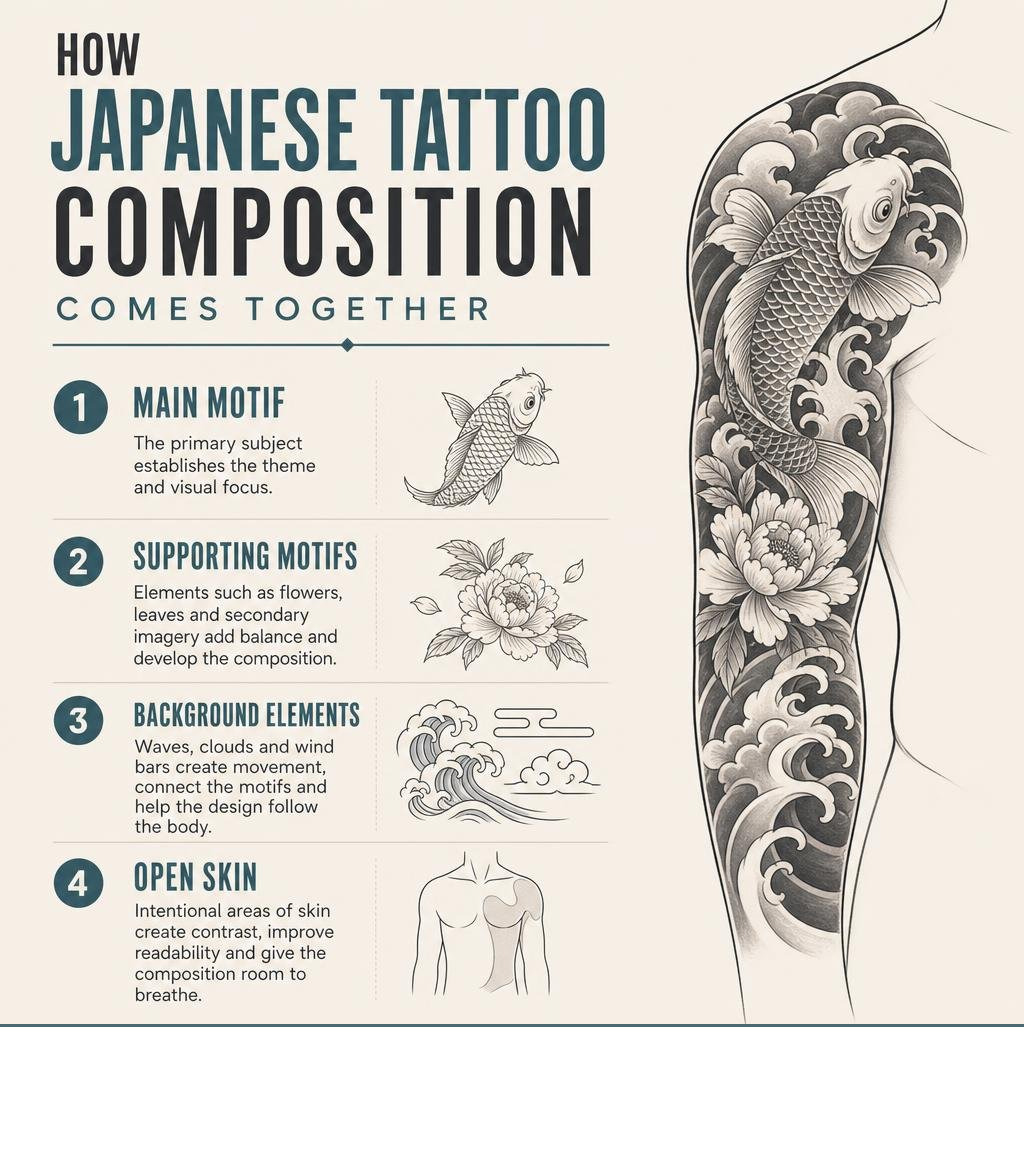
The best place to start is with a focal subject, such as a dragon, koi, Hannya mask or samurai, then build the composition around it with waves, wind bars, clouds or flowers. These background elements are not just filler. They connect the piece across the arm, leg or back so it moves naturally with the body.
Lighthouse Tattoo Studio works with clients on custom Japanese tattoo designs, with consultation focused on composition, body flow and how the piece will develop over time.
What Makes Black and Grey Japanese Tattooing Different?
Monochrome Japanese tattooing relies on the balance between solid black, softer grey shading and untouched skin. Colour can help separate parts of a design. Without it, the structure has to do more of the work.
That is why black and grey Japanese tattooing is not simply colour Japanese tattooing with the colour removed. The design still needs a clear focal subject, supporting background and enough open skin to stop the piece becoming too heavy as it settles.
It is also different from many Western black-and-grey styles, such as realism, portrait work, fine-line pieces or Chicano-inspired tattooing. A dragon, koi or Hannya mask is not just placed on the skin as a standalone image. In Japanese work, the main subject, background, flow and spacing are usually planned together, especially for sleeves, leg pieces, chest panels and backs.
What Makes Black and Grey Japanese Tattooing Work Well?
Strong black and grey Japanese tattooing is built around clear decisions, not just darker shading. The artist has to decide where the design needs weight, where it needs breathing room and how the whole piece will read on the body.
- Strong tonal hierarchy: the darkest areas should have a purpose, rather than making the whole tattoo equally dark.
- Controlled background: waves, clouds, wind bars and other background elements should connect the piece without competing with the focal subject.
- Enough skin breaks: open skin becomes especially important when colour is not being used to separate each part of the design.
- Appropriate scale: tiny details that look impressive in a reference image may not translate well to skin, especially in a larger composition.
- Body-aware composition: the design should be drawn for the actual arm, leg, back or chest, rather than simply adapting an existing illustration.
- Long-term readability: shapes, contrast and spacing should still make sense as the tattoo settles and ages.
This is where consultation matters. A strong idea may still need to be simplified, enlarged or rearranged so the main subject, background and open skin work together instead of fighting for attention.
Black and Grey vs Full Colour Japanese Tattooing
Both black and grey and colour Japanese tattoos can work beautifully. The better choice depends on the subject, placement, skin characteristics, existing tattoos and the look you prefer long term.
- Black and grey suits people who like a more restrained palette, strong contrast and a sculptural look.
- Full colour can create a brighter, more illustrative effect, especially when the design calls for red, green, blue or yellow.
- Ageing depends on the whole tattoo, not just the palette. Line weight, contrast, scale, application, aftercare, sun exposure and skin characteristics all influence how the piece holds.
- Cover-ups sometimes work well with darker backgrounds, but the existing tattoo’s density, placement, size and skin condition decide what is realistic.
For most clients, the decision is less about which style is easier to maintain and more about which look suits the idea, the body placement and the way the design will read from a distance.
How an Artist Builds the Composition
A strong Japanese tattoo usually starts with one clear focal subject, such as a dragon, koi, Hannya mask, phoenix, samurai figure or flower-based motif. The supporting imagery then has a job to do. Waves, clouds, wind bars, flowers and smaller details should frame the main subject, add movement and help the tattoo sit naturally on the body.
The goal is not to collect as many symbols as possible. It is to choose imagery that works together visually, suits the placement and gives the tattoo enough space to stay readable in black and grey.
Choosing Motifs and Background
Motif choice matters, but it should support the tattoo rather than turn the design into a catalogue of symbols. Flowers, waves, clouds, masks, koi and dragons can all work in black and grey, but the artist needs to consider their shape, spacing and contrast before deciding what belongs in the final composition.
In black and grey work, open skin becomes part of the design. Without colour separating each element, the artist has to make sure flowers, scales, masks, water and background shapes do not merge together as one dark mass over time.
Background choices matter just as much as the main subject. Water can support koi, dragons or certain floral designs, while clouds, wind and storm movement can give larger pieces direction across the arm, leg or back. Not every idea benefits from being combined, especially when the available canvas is limited.
Some motifs may fight for attention, crowd the available space or weaken the main subject. This is where an artist may suggest simplifying an idea, increasing the canvas size or changing the supporting imagery. The aim is to protect the strength of the finished tattoo, not to remove the client’s personal direction.
Placement and Scale
Placement changes the composition. A koi that works as a compact forearm piece may need a different layout if it becomes part of a full sleeve. A Hannya mask can read clearly on its own, but it may need larger supporting shapes if it sits within a back piece or leg sleeve.
Large subjects such as dragons, koi, masks, phoenixes, samurai figures and skulls can all work as strong focal points when the scale and supporting imagery suit the placement. In black and grey, the main question is not just what the subject means. It is whether the subject, background and available skin can create a clear design that will still read well as the tattoo settles.
Common Misconceptions About Black and Grey Japanese Tattoos
Misunderstandings about black and grey Japanese tattooing can lead to designs that look crowded, flat or difficult to read over time. These are the points Lighthouse Tattoo Studio usually clarifies during consultation.
Myth 1: Black and grey Japanese tattoos are easier because there is no colour
Black and grey work is not necessarily simpler. Because there is no colour to separate forms, line weight, black saturation, shading transitions and overall composition become even more important. A strong design needs enough dark structure to hold its shape, enough soft grey to create depth, and enough open skin to keep the image clear.
Myth 2: Any Japanese motif can be combined together
Japanese imagery is not a set of interchangeable symbols. Dragons, koi, masks, flowers, waves, clouds and warriors can all work beautifully in the right design, but the pairing should support the main subject rather than crowd it. At Lighthouse Tattoo Studio, consultation helps narrow the subject matter so the finished piece feels intentional rather than overloaded.
Myth 3: A dark Japanese tattoo can always cover an existing tattoo
Black and grey Japanese work can be a strong cover-up option, but it is not automatic. The existing tattoo’s darkness, density, placement, size and the condition of the skin all affect what is possible. This is why an in-person consultation and tracing are essential before confirming whether a cover-up can work and how the new composition should be planned.
Placement, Scale and Readability
A successful large-scale piece needs to be planned around the body. At Lighthouse Tattoo Studio, our artists look at how the design will sit on the chosen area, how it will move when the body moves and how the main subject will read from a distance.
Shading and Contrast in a Black and Grey Japanese Tattoo
In black and grey Japanese work, the technical choices should support the design rather than distract from it. Strong outlines help the main subject stay clear, while smooth grey shading, deep black areas and open skin breaks give the piece contrast and depth.
This balance matters most in larger pieces. A dragon, koi, Hannya mask or floral motif needs enough space to breathe, so the details stay readable as the tattoo settles over time. Darker background elements can frame the design, while lighter areas help the main subject stand forward.
Sleeves, Leg Pieces and Back Pieces
Japanese tattoo work often treats the human body as a unified canvas rather than a set of separate sticker-like images. The amount of background used depends on the subject, placement and overall composition. A large dragon may require substantial background work to connect the piece around the limb, while a smaller motif may need considerably less.
- Sleeves and legs: Planning a Japanese full sleeve or leg sleeve requires consistent background motifs. If water and crashing Japanese waves are used at the wrist or ankle, they should flow logically throughout the piece rather than clashing with unrelated wind bars on the opposing side of the same limb.
- Back pieces: A back piece gives the artist more room to build a large focal subject with supporting background, but it still needs clear contrast, spacing and movement so the design does not become too dense.
- Larger connected work: Bigger Japanese tattoo projects need a plan for how the background, focal subject and open skin will connect between sessions, especially if the tattoo may extend later.
Existing Tattoos, Cover-Ups and Consultation Planning
Large-scale work needs careful preparation, clear pacing and open collaboration between client and artist.
Is a Black and Grey Japanese Tattoo Right for You?
A black and grey Japanese tattoo can be a strong choice if you prefer restrained, monochromatic artwork with bold contrast instead of a full colour palette. It suits clients who like traditional Japanese composition, visible skin breaks and larger designs that move with the arm, leg, back or chest rather than sitting as isolated imagery.
It may not be the right direction if your main interest is bright colour, because colour Japanese tattooing offers a different visual effect. Existing tattoos can also affect the decision. Older, darker or densely packed work may limit where open skin, grey shading and detailed focal imagery can sit, so cover-up ideas need to be assessed in person before the design is confirmed.
Placement and scale are worth discussing early. A koi, mask or floral motif may work as a smaller standalone piece, while dragons, sleeves, leg pieces and back pieces usually need more room for background, body flow and long-term readability. We can help you decide whether black and grey suits your subject, existing tattoos and preferred placement before committing to the final design.
Before Your Japanese Tattoo Consultation
By this point, you should have a clearer sense of whether black and grey Japanese tattooing suits the look, scale and placement you have in mind. The consultation is where those ideas become practical: what can work on your body, what needs more space, and how the main subject, background and open skin should be planned.
You do not need a finished design before enquiring, but it helps to bring a few clear starting points:
- Desired placement: where on the body you want the tattoo to sit, and whether it may connect to future work.
- Approximate size: whether you are thinking about a compact piece, half sleeve, full sleeve, leg piece, chest panel or back piece.
- Main subject or concept: the key image you are drawn to, such as a dragon, koi, Hannya mask, flower or wave-based design.
- Existing tattoos in the area: especially if the new piece needs to work around older tattooing or act as a cover-up.
- Colour or monochrome preference: whether you are set on black and grey or still comparing it with full colour Japanese work.
- Reference images you like: useful examples of mood, scale, flow or subject matter, rather than images to copy directly.
- Previous tattoo experience: whether this is your first tattoo or part of a larger collection.
- Any concerns about the process: such as session length, healing, placement, cover-up options or how the design will age.
From there, the artist can assess what the design needs to work properly. That includes the best canvas size, how the main subject should sit on the body, where background movement should go, how much open skin is needed, and whether the idea needs to be simplified, expanded or adjusted for long-term readability.
Cover-Ups Need an In-Person Assessment
Black and grey Japanese designs can be a strong option for covering old, unwanted ink because the style often uses deep black areas, flowing clouds and layered wave shapes. That does not mean every old tattoo can be covered cleanly in this style.
At Lighthouse Tattoo Studio, an in-person consultation and physical skin tracing are essential for cover-ups to assess the existing tattoo and determine how the new design can work over it. We use tracing to understand the older tattoo’s shape, density and placement, then plan where darker background, detailed focal areas and open skin can realistically sit.
What Happens After You Enquire
The client journey follows six clear stages:
- Enquiry: Initial contact outlining your idea, preferred placement and reference imagery.
- Consultation: Meeting in person at our Surry Hills or St Peters studio to discuss scale, flow, budget alignment and skin tracing.
- Design collaboration: Custom artwork composition tailored to your body’s anatomy.
- Stencil/tracing: Applying the design to confirm alignment and natural movement.
- Tattoo session(s): Careful tattooing across the number of sittings your piece needs.
- Aftercare and ongoing support: Clear aftercare guidance for looking after the tattoo as it heals.
Larger Japanese tattoo projects are usually planned across multiple sittings, but the exact timeline depends on the design, placement, background, existing tattoos and how each session is paced. Your artist can give more useful guidance after seeing the area in person and understanding the final composition.
For sitting prep, arrive well-hydrated after a substantial meal and a solid night of sleep. Wear comfortable clothing, such as a backward robe or button-up shirt for back sessions. If you are considering numbing cream, discuss it with your artist first so they can advise whether it is suitable for your session and placement.
For aftercare, follow the specific instructions provided by your artist. Healing varies between people, placements and session types, so your artist’s guidance should come first. In general, avoid swimming or soaking while the tattoo is healing, keep the area clean as instructed, protect healed tattoos from excessive sun exposure, and contact a qualified medical professional if you have concerns about abnormal healing.
Common Questions About Black and Grey Japanese Tattoos
Are black and grey Japanese tattoos traditional Irezumi?
Black and grey Japanese tattoos can still draw from traditional Irezumi design principles, especially when the piece uses strong outlines, a clear focal subject, flowing background and balanced open skin. The difference is the palette. Instead of relying on colour contrast, the artist has to create structure with black, grey shading and skin breaks. A custom monochrome Japanese-inspired tattoo is not automatically traditional Irezumi simply because it uses Japanese motifs, so this is best discussed with the artist during consultation.
How is black and grey Japanese tattooing different from Western black and grey?
Western black and grey tattooing often refers to realism, portrait work, fine-line pieces or illustrative styles. Black and grey Japanese tattooing uses a monochrome palette, but the composition still follows Japanese design thinking. The main subject, background, body flow and visual balance all need to work together rather than treating the motif as a standalone image.
Can I get a black and grey Japanese tattoo if I do not want a full sleeve?
Yes. Smaller Japanese-inspired motifs such as a Hannya mask, single blossom, skull, koi or compact wave design can work well without becoming a full sleeve. Larger subjects such as dragons, full leg pieces or back pieces usually need more space so the background and focal imagery can breathe.
How much background does a Japanese tattoo need?
The amount of background depends on the subject, placement and scale of the design. A large dragon or koi sleeve may need waves, clouds or wind bars to connect the piece around the limb, while a smaller motif may only need enough background to frame the image clearly.
Can Lighthouse design a Japanese tattoo around an existing tattoo or scar?
Often, but it needs to be assessed in person. Existing tattoos, scar tissue, placement, skin condition and the amount of available open space all affect the design. For cover-ups, Lighthouse Tattoo Studio uses consultation and tracing to understand what can be worked into the new composition.
Can Japanese tattoo imagery be mixed together freely?
Not every motif combination makes sense visually or traditionally. Dragons, koi, masks, flowers, waves and clouds can all work beautifully, but the pairing needs to support the main subject rather than crowd it. During consultation, the artist may suggest simplifying, changing or resizing an idea so the final tattoo feels balanced.
How do I choose the right Japanese motif for my tattoo?
Start with the subject you are most drawn to, then consider placement, scale and whether the image suits black and grey. A good consultation helps refine the idea into something that works on the body, whether that means a compact flash-inspired design or a larger custom composition.
Will a black and grey Japanese tattoo fade or blur over time?
All tattoos change as they settle and age. A black and grey Japanese tattoo can hold strong readability when it has clear line weight, good contrast, enough open skin, solid application and proper aftercare. Sun exposure, placement, skin characteristics and the original design density also affect how it looks over time.
How do I book a consultation at Lighthouse Tattoo?
You can start by sending an enquiry through the Lighthouse Tattoo Studio contact page with your idea, preferred placement, approximate size and any useful references. You can also view the artist directory or visit the Surry Hills and St Peters studio pages to choose the best starting point for your project.
Begin Your Black and Grey Japanese Tattoo Journey at Lighthouse
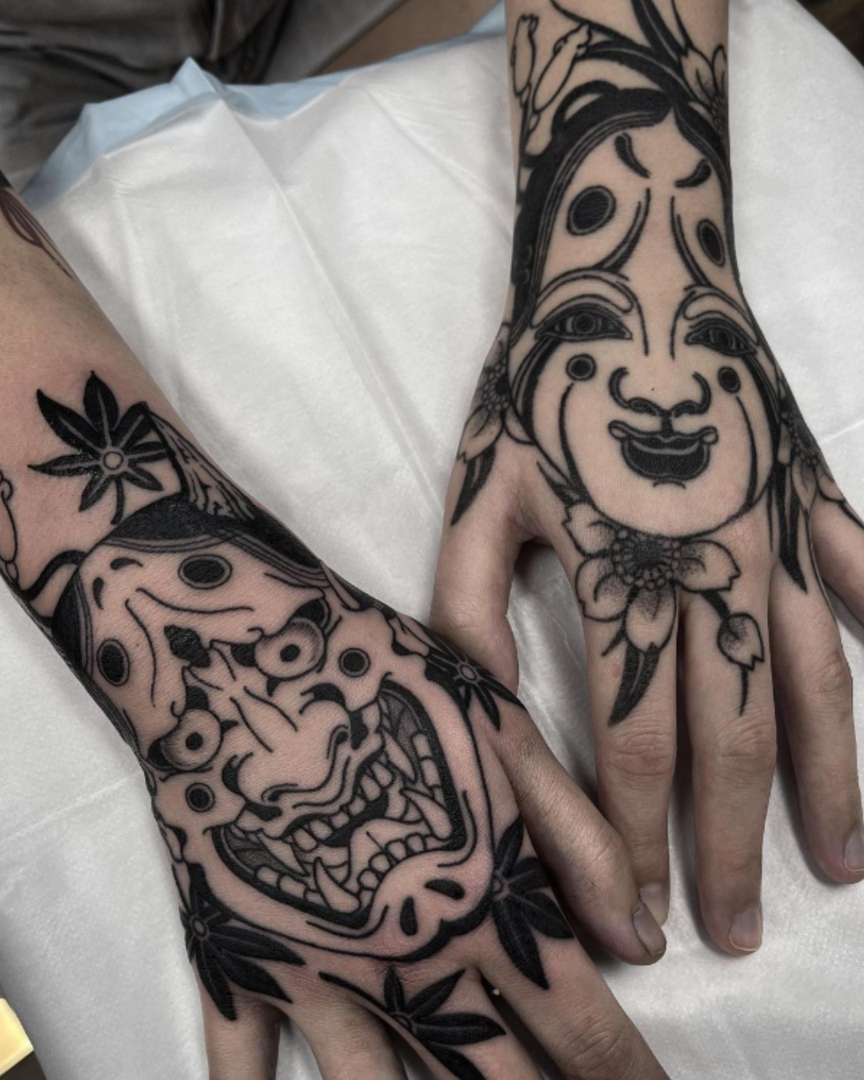
Black and grey Japanese tattooing is not simply colourless Japanese tattooing. The design still needs clear composition, strong body flow, balanced contrast and enough open skin to keep the main subject readable. The right imagery depends on the individual project, and any existing tattoos need to be assessed in person before the size, placement and approach are confirmed.
If you’re considering a black and grey Japanese tattoo, the best place to start is a consultation. Bring through your ideas, preferred placement and any reference imagery you have, and our artists can discuss what will work for your body and the overall composition.
Ready to plan your next piece? Connect with our team across our Sydney studios to start your design:
- Book a consultation through our Tattoo Enquiry Page
- Explore our resident artists via our Tattoo Artists Directory
- Browse our portfolio of Custom Japanese Tattooing
- Visit our studios in Surry Hills or St Peters to discuss your project in person

