

You have probably got a few reference images saved, a rough idea of where the tattoo might sit, and a subject you keep coming back to. Choosing a custom Japanese tattoo artist in Sydney is usually the harder part, especially for a large piece where the design needs to work with your body rather than just look good as a drawing.
At Lighthouse Tattoo Studio in Sydney, our artists work across custom Japanese tattoo design, Japanese flash tattoos, sleeves, back pieces and larger body-flow projects at our St Peters and Surry Hills studios. This guide helps you understand what genuine Japanese tattoo experience looks like, why the design needs to be planned around the body, and what to prepare before a Lighthouse consultation.
How to Tell if an Artist Has Genuine Large-Scale Japanese Tattoo Experience
A custom Japanese tattoo artist in Sydney should be easier to assess when you know what genuine experience looks like. For larger pieces, look beyond a few strong Japanese-style images and pay attention to consistency, healed work, scale, placement and how clearly the artist explains the design decisions.
One thing we always recommend looking at is whether Japanese tattooing appears regularly across the artist’s work. A portfolio with sleeves, back pieces, chest panels, leg pieces and smaller custom motifs usually says more than one impressive dragon or koi in an otherwise unrelated feed. It suggests the artist is used to the visual language of the style, not just borrowing its surface look.
Healed work is worth checking where it is available. Fresh tattoos can look sharp under ideal lighting, but healed Japanese work tells you more about readability, line weight, black areas, colour balance and how the background holds once the tattoo has settled. From our experience, this is particularly important with larger pieces, where the tattoo needs to stay clear from a normal viewing distance.
Placement experience matters as much as style. A Japanese tattoo sleeve, back piece, chest panel, leg piece, smaller custom motif and cover-up all ask different things of the design. If a Japanese tattoo artist Sydney clients are considering can talk clearly about your placement, scale and body shape, and show similar work, that is usually a better sign than a portfolio that only proves they can draw the subject.
Why Japanese Tattoo Composition Needs to Be Planned Around the Body
Japanese tattoo design often works best when the main subject, supporting elements, background and body placement are planned together. The tattoo should feel like one composition built for the body, rather than a standalone image placed onto the skin.
In traditional Japanese tattoo design and Irezumi-inspired work, the main motif usually sets the direction of the piece. A koi might naturally sit with water, while dragons are often supported by clouds, wind or waves depending on the movement of the design. Flowers, masks, tigers, snakes and other Japanese tattoo motifs can change the feeling of the piece, so the stronger question is not only “What symbol do I like?” but “How will these elements work together?”
Background is where a lot of the design logic shows. Waves, clouds, wind bars, flowers and other supporting elements should help frame the main subject and carry the tattoo across the body. On a sleeve, that might mean thinking about how the design turns around the arm. On a Japanese back piece, it might mean giving the main subject enough space so the whole composition can still be read from a distance.
Japanese tattoo symbolism needs some care, but it does not need to become a history lesson before you book. Cultural context can help avoid combinations that feel visually confused or poorly considered. A good consultation should make those choices easier to understand by explaining why a particular subject, background, direction or placement suits the project.
What to Prepare Before Your Lighthouse Consultation
A useful Japanese tattoo consultation usually starts before you walk into the studio. The clearer you are on the body area, rough size, main subject and the references that genuinely appeal to you, the easier it is for the artist to shape the idea into a custom Japanese tattoo that suits your body.
Before contacting Lighthouse Tattoo Studio, it helps to bring a small set of references rather than a huge folder of unrelated images. References are useful for mood, subject, colour direction or details you like, but they should guide the design rather than become something copied directly onto the skin. The consultation is where those references are translated into placement, body flow and long-term readability.
It also helps to be honest about the scale you are open to. Some ideas work as compact Japanese flash tattoos, while others need more space to breathe. Larger dragons, koi, snakes, masks, sleeves, back pieces and leg pieces often benefit from being planned as custom body-flow projects rather than squeezed into a small area.
If you have an existing tattoo, mention it early. At Lighthouse Tattoo, cover-ups require an in-person consultation and tracing so the artist can assess the existing tattoo, density, placement and how the new Japanese composition can work over it.
What Happens When You Commission a Custom Japanese Tattoo
Commissioning a custom Japanese tattoo usually moves from enquiry to consultation, design collaboration, body mapping, background and composition decisions, scope and sessions, stencil or tracing, tattoo session or sessions, then aftercare and ongoing support. The process should help turn your references into a tattoo that suits your body and the scale of the project.
Flash and custom work can both have a place. Japanese flash tattoos tend to suit smaller, self-contained motifs, while custom work is usually better for sleeves, backs, chest pieces, leg pieces and designs that need to be built around the body. If you are unsure which direction suits your idea, the consultation can help separate a compact flash-style choice from a larger body-flow project.
As a rough guide from studio experience, larger Japanese tattoo pieces are usually spread across several sessions, although the actual time can vary considerably depending on scale, placement, background, detail, skin, healing and pacing. A half sleeve may sit around 12–18 hours, a full sleeve around 25–35 hours, and a leg sleeve around 35–50 hours. For full backs, Lighthouse Tattoo generally estimates roughly 40–50 hours without a background, or 60–80 hours with a complete background. A full-day appointment usually includes around 6–7 hours of actual tattooing, and larger Japanese work is generally completed in stages, often 2–4 weeks apart.
Useful questions before committing include:
- Do you specialise in custom Japanese tattooing?
- How do you approach large-scale Japanese pieces such as sleeves, back pieces or leg pieces?
- How will you adapt the design to my placement and body shape?
- Do you have healed examples of similar work?
- How do you decide on the background and supporting motifs?
- Will the project likely require multiple sessions?
- How does the consultation and design process work?
- Can you work with an existing tattoo or cover-up?
FAQ: Choosing and Booking a Custom Japanese Tattoo in Sydney
How do I choose a Japanese tattoo artist in Sydney?
Choose a Japanese tattoo artist Sydney clients can assess through consistent Japanese work, relevant healed pieces and experience with the placement and scale you want. The consultation should also give you confidence that they can explain the subject, background and session plan in plain language.
What should I look for in a Japanese tattoo portfolio?
Look for clean healed work, readable composition and examples similar to your intended placement. For larger projects, the portfolio should show that the artist can build designs around the body, not just create a strong flat image.
How does Japanese tattooing work with body flow?
Japanese tattooing often uses the shape of the body to guide the direction, background and scale of the design. This is especially important for sleeves, back pieces, chest panels and leg pieces, where the tattoo needs to stay readable as it wraps, bends and moves.
How many sessions will a Japanese tattoo need?
The number of sessions depends on the size, placement, background, detail and how the work is paced. Larger Japanese tattoos are usually completed over several sessions, so the best estimate comes after the artist has seen the placement and discussed the design properly.
Can Japanese tattoos cover existing tattoos?
Japanese tattoos can sometimes work for cover-ups, but the existing tattoo affects what is possible. At Lighthouse Tattoo, cover-ups require an in-person consultation and tracing so the artist can assess density, placement and how the new composition can sit over the old tattoo.
Should my Japanese tattoo be flash or custom?
Flash tends to work best for smaller, self-contained motifs, while custom work suits sleeves, backs, chest pieces, large placements or designs that need to be built around your body. If you are unsure, the consultation can help decide which option suits your idea and placement.
Ready to Find the Right Custom Japanese Tattoo Artist in Sydney?
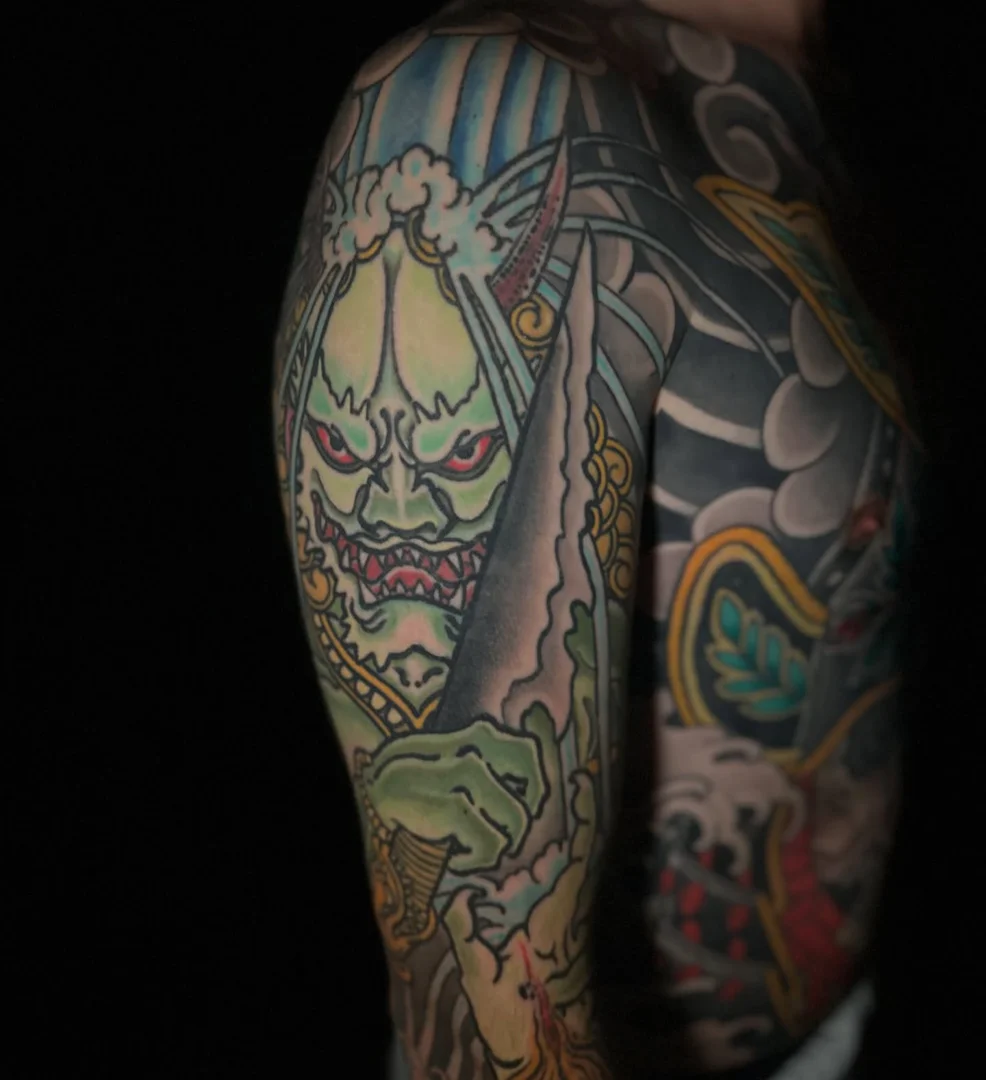
Finding the right custom Japanese tattoo artist in Sydney is really about feeling confident in the person you choose. Look closely at their Japanese tattoo work, bring the ideas and references you have, talk through the placement, and notice whether their approach feels right for your body and the kind of piece you want.
If you are planning a custom Japanese tattoo in Sydney, Lighthouse Tattoo Studio can help you work through the idea, placement, design approach and booking process before you commit to the project.
- Contact Lighthouse Tattoo Studio to discuss your custom Japanese tattoo idea.
- View our Japanese tattooing work and related styles.
- Explore our artists to find the right fit for your project.

